Your Endogenous Regulatory System and Botanicals
Ever felt so hungry you can’t think straight? Or noticed how a good night’s sleep helps to keep you calm and collected? These aren’t just random occurrences – they’re managed by a special system in your body called the endogenous regulatory system (ECS).
Understanding the ECS
The ECS is like your body’s control room. It helps manage everything from mood swings to body aches, and even your sleep pattern. But the real stars of this control room are tiny switches called receptors.
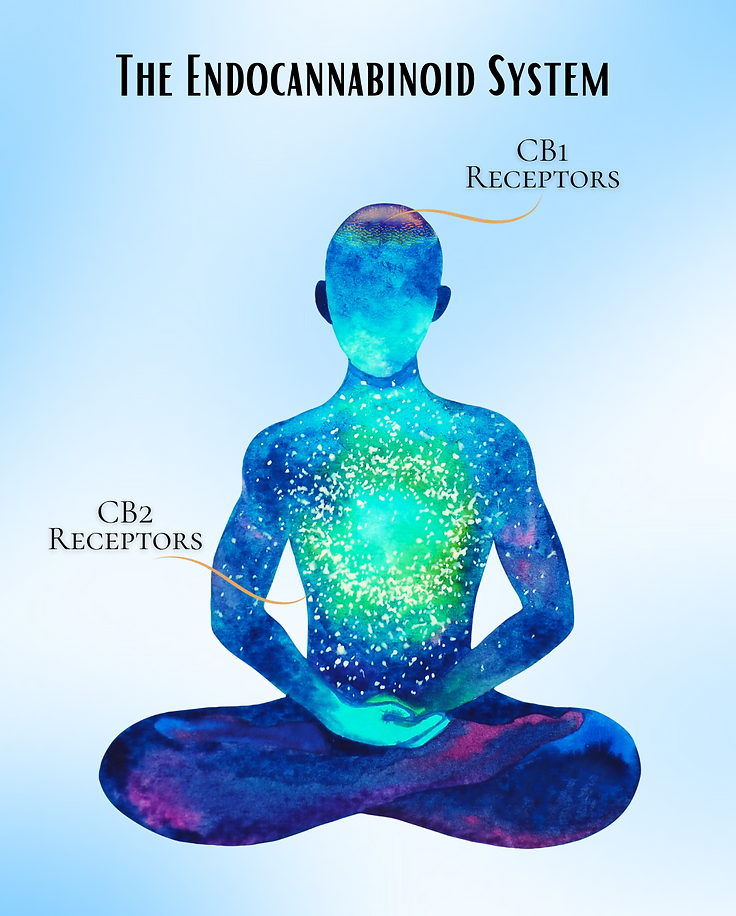
Think of these receptors as light switches. When they’re switched ‘on’, they perform various tasks. These are categorized into two types, CB1 and CB2.
CB1 is like your body’s ‘mood manager’ – taking care of how you feel and sleep—while CB2 is more of a ‘bodyguard’, looking after inflammation and the body’s defense system.
Now, how do these switches get turned on? They need a key, and that’s where endogenous compounds come in. These are substances our bodies naturally produce.
There is a remarkable similarity between these substances and those in botanicals.
Plant compounds and Endogenous compounds
The main ingredients in the botanical are plant compounds called plant compounds and CBD, these also interact with these switches, but in different ways.
plant compounds can turn on both types of receptors to affect your mood, appetite, and more.
CBD, however, doesn’t directly interact with CB1 or CB2 receptors. Instead, it helps our body’s natural keys (endogenous compounds) to stay active longer, further increasing their effects.
It’s an exciting time as researchers dive deeper into this system and the potential benefits of the botanical.
So, the next time you’re savoring a botanical-infused snack or relaxing with a soothing CBD cream, remember—you’re not just enjoying a plant. You’re tapping into an ancient system within your own body, which plays a vital role in your health and wellbeing.
A Note to Our Readers:
This blog is for informational purposes only and does not represent the views of Rite Innovations. The insights shared are anecdotal and not universally applicable. The FDA has not evaluated the statements about botanical products, and we recommend consulting with a physician before consuming them. These products are not intended to diagnose, treat, cure, or prevent diseases. Support for claims made on this website is available upon request. This article is not intended as legal advice.