When most people think about plant-based wellness, a small handful of compounds get all the attention. But the natural world produces hundreds of bioactive compounds that interact with human biology in interesting ways.
Beta-caryophyllene — found in black pepper, cloves, and rosemary. Notable for being one of the few plant terpenes that binds directly to CB2 receptors in the endocannabinoid system.
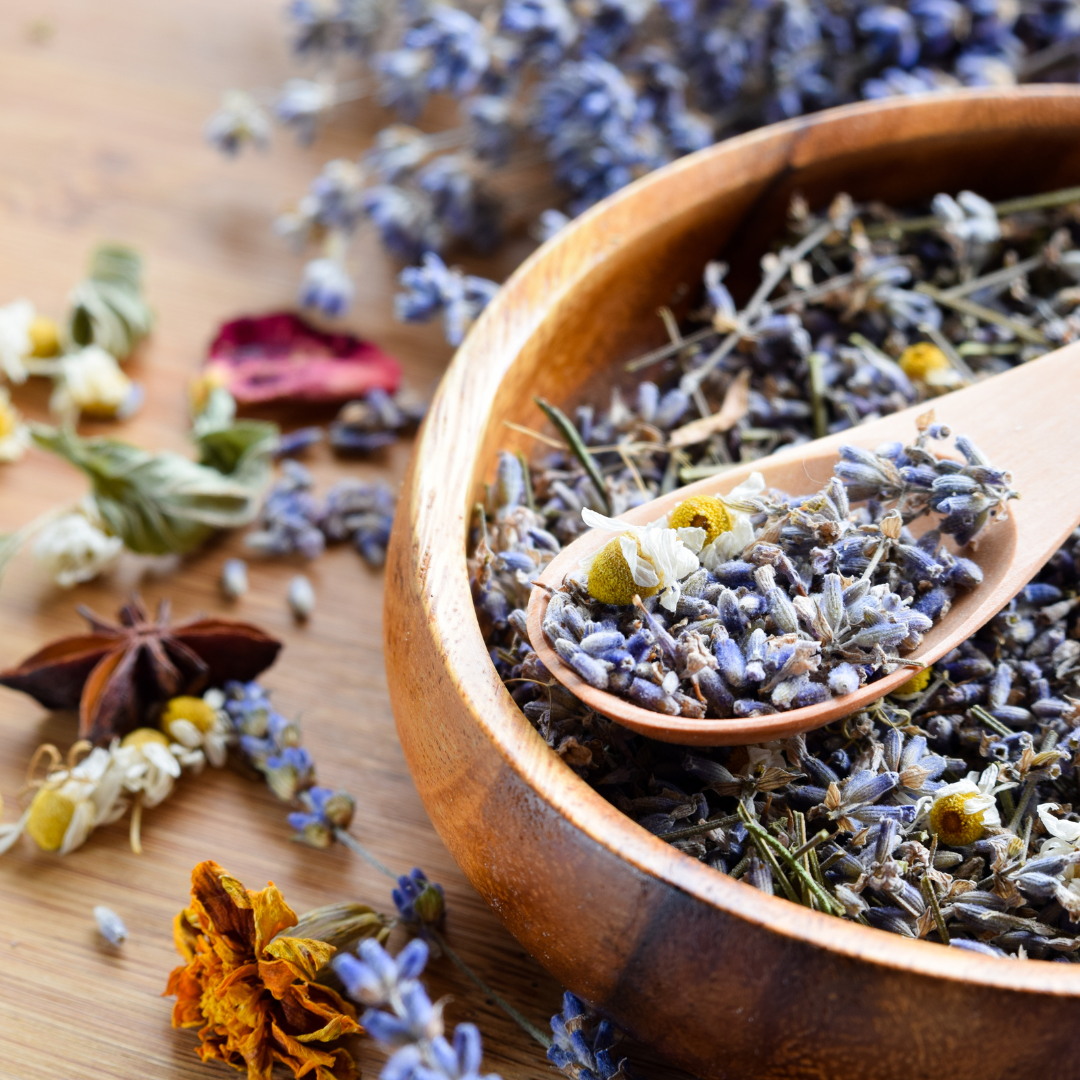
Linalool — the dominant terpene in lavender. Long associated with calming effects in traditional aromatherapy.
Bisabolol — primary terpene in chamomile. Traditional uses include digestive comfort and skin care.
Myrcene — abundant in hops, lemongrass, and bay laurel. Often associated with sedative effects in botanical traditions.
Pinene — what you smell in pine needles, rosemary, and basil. Traditional association with alertness and respiratory comfort.
Limonene — citrus peel oils. Traditionally used for mood lift and digestive support.
Why this matters for your wellness routine. Each terpene contributes a distinct character to a botanical’s overall effect. Understanding the dominant terpenes in your favorite blends helps you choose more intentionally — lavender at night, rosemary in the morning, chamomile for digestion.
A reminder about research. Traditional uses are not the same as clinical evidence. If you’re using botanicals to address a specific health concern, talk to a clinician or qualified botanicalist.
The most interesting plant compounds are often the ones that aren’t on the headline list.